
Sam M takes us on a slow-cooked journey through cholent’s history, diaspora, and divisive charm - proving that this “hot and slow” stew is worth bean patient for.
Despite the wonderfully imaginative folklore claiming it comes from “shul-end,” cholent actually takes its name from the French chaud lent, meaning “hot” and “slow.” Honestly, it couldn’t be more fitting. A staple of Shabbat lunch, cholent has become something of an obsession for me.
Its literal “hot and slow” nature makes it the perfect solution to the age-old challenge of not being able to cook on Shabbat, allowing for hearty, comforting lunches all year round. Over the coming weeks, months, and perhaps years, I’m embarking on what I’m calling The Cholent Chronicles: a journey of tasting, reviewing, and ultimately crafting my own quintessential cholent.
You can always smell a cholent long before you see it, and truthfully, that might be for the best. Aesthetically, cholent can leave a lot to be desired. After extensive research (interrogating my friends and family), I’ve learned that cholent is surprisingly polarising, and I suspect its appearance plays a major role. My advice? Give it a chance. With this series, I’m hoping to nudge a few sceptics to reconsider their cholent futures.
“Cholent is great, it just takes so very long.”
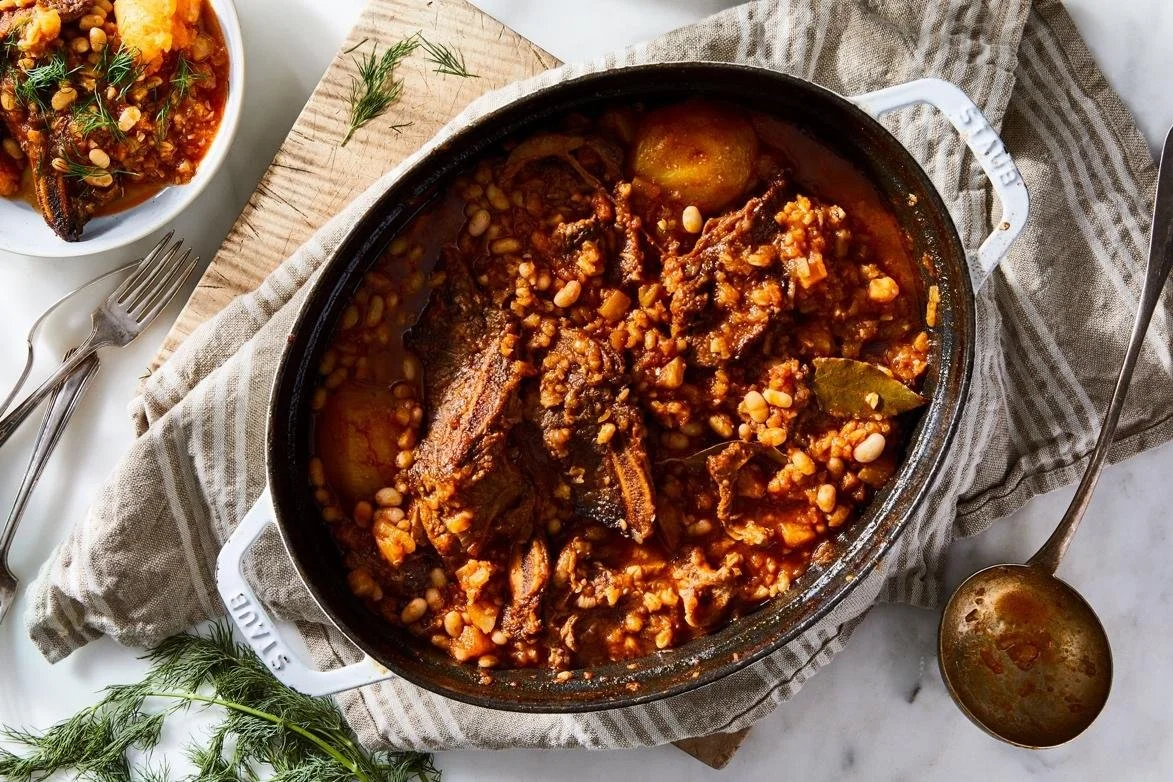
This Sabbath stew has been part of Jewish life since at least the 12th century. Originating in Spain, where it was known as chamin - from the Hebrew cham, meaning “hot” - it travelled north through Provence, where the French Ashkenazi community gave it the name we use today.
At its core, cholent relies on simple, honest ingredients: beans, barley, potatoes, and meat, slow-cooked with little more than time and patience. Over hours, these staples meld into something warm, hearty, and far greater than the sum of their parts.
As Jewish communities migrated, each diaspora created its own variation. Ingredients, textures, spices, and techniques shifted according to geography and availability. In Morocco, dafina might replace barley with wheat berries and include chickpeas and eggs. In Eastern Europe, kishke - stuffed intestine - became an essential addition. These variations aren’t arbitrary; they’re culinary maps, charting where our ancestors settled and how they preserved tradition using what the land offered. And of course, being Jewish, everyone believes their version is the correct one.
By the early 20th century, cholent had firmly established itself in America, particularly on New York’s Lower East Side. Nearly every local bakery would be filled with pots of the stew on Fridays, as families dropped off their prepared cholent to be slow-cooked overnight, ready for Shabbat.
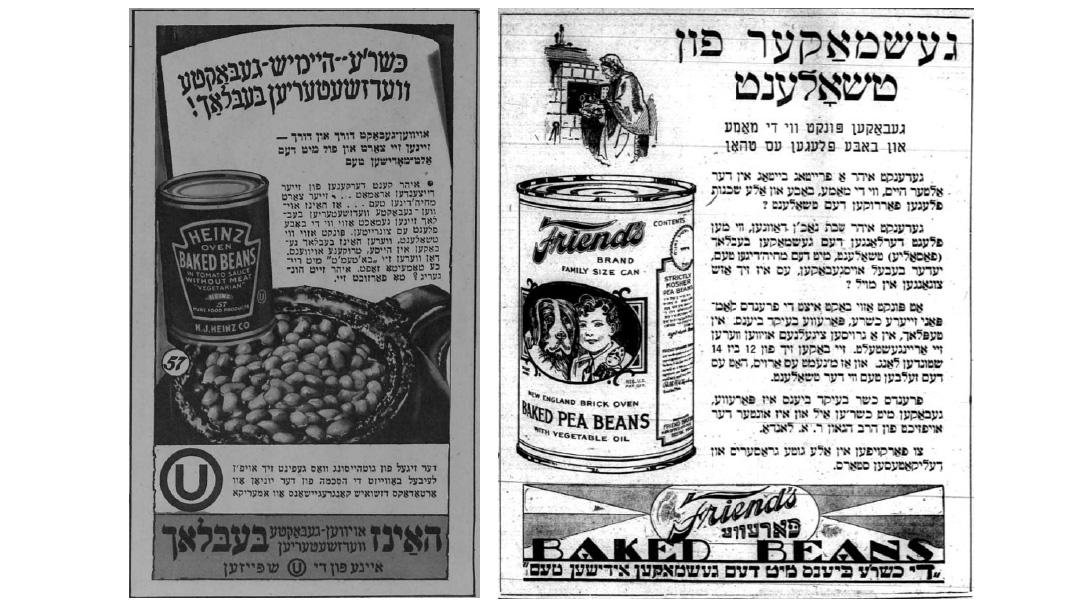
An advertisement in the Yiddish press titled “Cholent Is Its Name,” published in New York in the 1930s.
Without dragging you through every twist and turn of this millennium-long slow-cooker saga, here’s the short version: every Jewish diaspora, spanning continents and cultures, has created its own unique cholent - each delicious in its own way.
My mission? To try them all. Whether that means visiting a cholenteria (yes, they exist), a shul kiddush, or any Jewish home willing to feed me.
I hope you’ll join me on what I’ve now decided to call the “Bean There, Done That” Tour. And remember: slow and steady wins the taste.
