
The Day After
Alfie Playford reflects on Holocaust Memorial Day, October 7th, and what it means to stand in the day after.
There are days when writing feels optional, and days when it feels necessary.
Today is the latter.
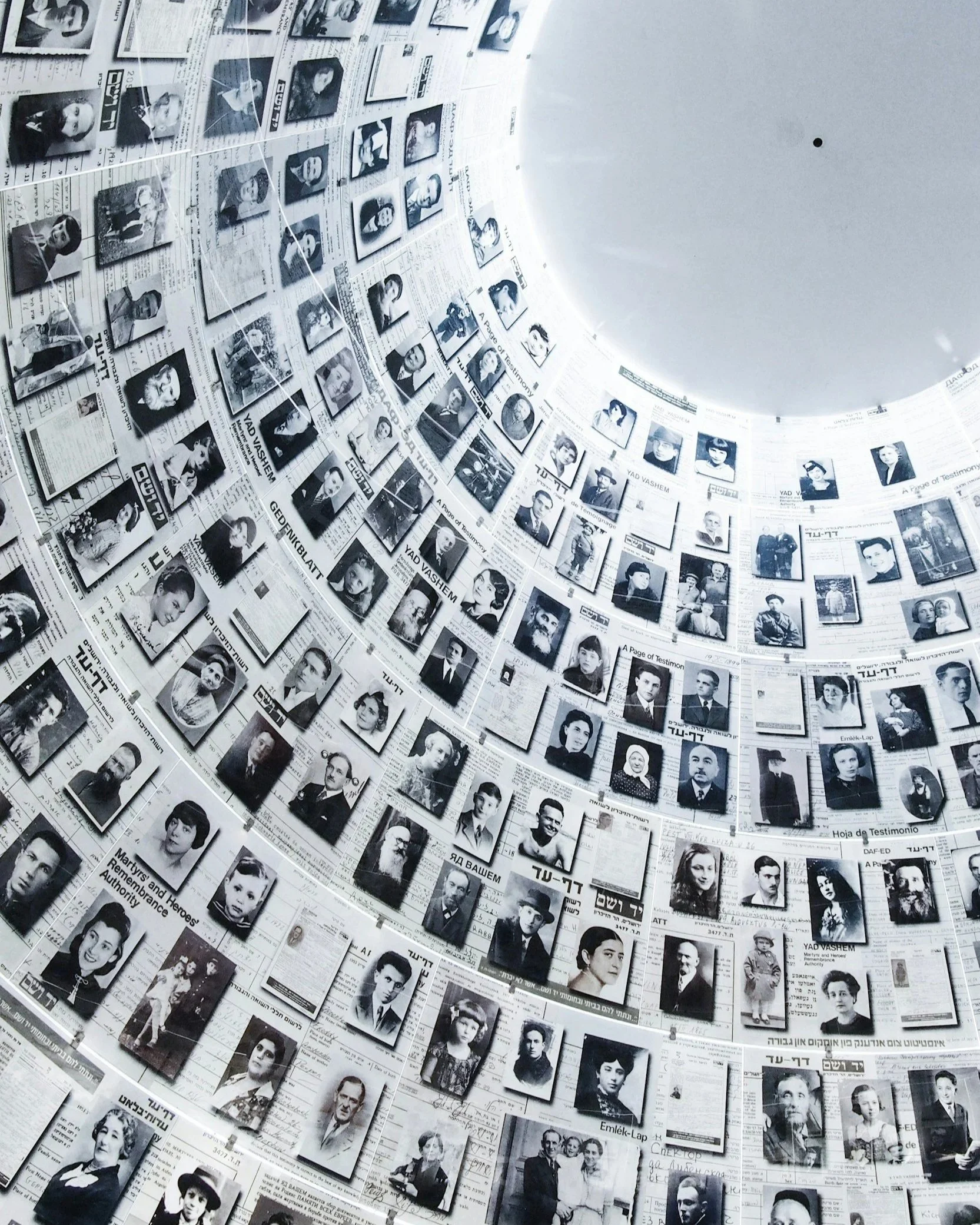
On Holocaust Memorial Day 2026, 81 years since the liberation of Auschwitz, I am writing not because enough time has passed, but because history insists that we speak when memory and reality collide. It is a day that forces us, as Jews, to sit with the weight of history, to remember what happens when the world looks away, when Jewish lives are dehumanised, and when survival itself becomes an act of resistance.
This year, Holocaust Memorial Day feels different. Heavier. More immediate. Because for the past year and a half, Jewish history has not felt distant or confined to textbooks. It has felt alive, unfolding in real time.
October 7th did not end when the day did. For those of us in the diaspora, it followed us into our homes, our schools, our campuses, our shuls, and our youth movement spaces. It followed us into conversations that suddenly felt more fragile and more urgent. Since that day, being a young Zionist in the diaspora has meant learning how to hold grief, fear, anger, pride, and hope all at once, often while trying to explain our pain to a world that does not always want to hear it.
October 7th shattered the illusion of distance. Israel was no longer “over there”. It was personal. Names replaced numbers. Faces replaced headlines.
Nowhere was this more painfully clear than in the stories of the hostages. They became a constant presence in our lives: on posters, in prayers, on social media, and through the yellow ribbons wrapped around wrists, bags, and fences. Time stopped feeling normal. Days were counted not by calendars, but by how long they had been gone.
Janurary 27th, we mark Holocaust Memorial Day, the anniversary of Auschwitz’s liberation, and the aftermath of Monday 26th January sits heavy in Jewish history. That day captured the unbearable duality that has defined this period so clearly. The confirmation of the death of Ran Gvili was devastating. Another life lost. Another family shattered. Another reminder that Jewish suffering is not only something we remember; it is something we are still living with. Ran’s death reopened wounds that many of us have been carrying quietly since October 7th.
And yet, that same day held something else. The return of the hostages. Finally.
After more than 800 days of waiting, hoping, praying, and counting, we could bring them home. Not every story ended as we wished. Not every family received the miracle they deserved. But something shifted. For the first time since October 7th, it felt like we could breathe, even if only slightly. Like history, frozen in trauma, had finally taken its first step forward.
On our Israel trip in the summer, we spoke about the idea of a “metaphorical October 8th”, the day after catastrophe. The moment when survival turns into rebuilding. When grief begins to make space for healing. Reaching October 8th does not mean forgetting October 7th, just as Holocaust Memorial Day does not mean leaving the Shoah behind. It means carrying memory forward without being consumed by it.
For me, that moment became deeply personal through a simple but powerful symbol: the yellow string wrapped around my wrist. I tied it at Kesher 2024, when the pain was raw and the future felt impossibly uncertain. It stayed with me through everything. Through conversations I did not know how to have, through pride and exhaustion, through hope and heartbreak. It became a quiet commitment: I will not forget. I will not look away. I will remember.
After more than 800 days, cutting that ribbon felt surreal. It was not relief. It was not closure. It was recognition. Recognition that while trauma will always be part of our story, it does not get to dictate every chapter. Cutting the ribbon was not an ending; it was a transition. A step into October 8th.
Holocaust Memorial Day reminds us that Jewish history is defined not only by loss, but by survival, continuity, and responsibility. October 7th has now joined that history, not as a comparison, but as a continuation of the truth that Jewish safety can never be taken for granted, and Jewish resilience is never accidental.
As young Jews and Zionists in the diaspora, our relationship with Israel, and with Jewish history, has been irrevocably shaped by this past year. We have been tested in our identities, our confidence, and our sense of belonging. But we have also shown up. For Israel. For one another. For the values we refuse to abandon.
We remember Ran Gvili.
We welcome home those who returned.
We mourn those who did not.
And we move forward, because choosing life, memory, and Jewish continuity is itself an act of defiance against those who seek our extinction.
This week, of all weeks, reminds us that the Jewish story did not end in Auschwitz, did not end on October 7th, and will not end now. We are still writing what comes next.
But for the first time, it feels like we are finally standing in the day after horror.
Am Yisrael Chai.
