
Jamie Smokler explores the soundtrack of Israel Tour, from Omer Adam and Pablo Escobar to the songs that connect British Jews to Israeli culture and identity.
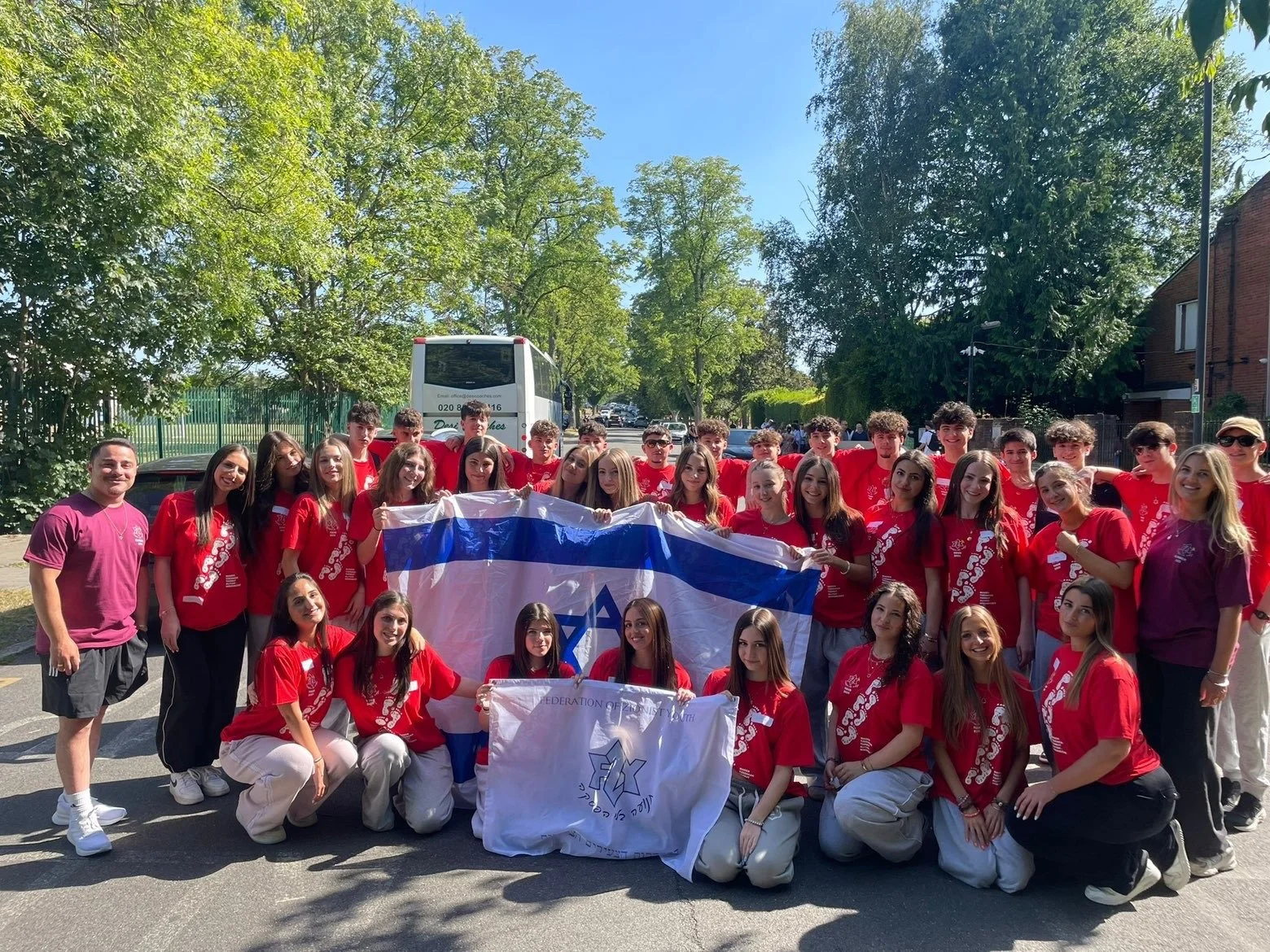
Imagine. It’s day six of FZY Israel Tour. Your first Shabbat has come and gone, and you’re on your way to Aqua Kef. You’re tired, as always, and all you want to do is sleep on the coach. Unfortunately, your madrichim have other ideas. From the back of the coach, you can see your British Mads singing their hearts out. Out of tune, in the wrong key, and absolutely butchering the beautifully written Hebrew lyrics. Naturally, you pull out your phone to film them. That’s going straight on the group chat. Then, your Israeli Mads start joining in, singing the Hebrew words with effortless ease. The tune sounds vaguely familiar.
Is that Omer Adam? Is that Tel Aviv?
You put down your phone, shout for the music to be turned up, and make sure everyone at the back can hear what's playing. Less than 30 seconds later, the entire back of the coach is screaming along with you. Omer Adam never sounded this good!
But what are we actually singing? Having led FZY Israel Tour in 2025 and 2026, I still find that some song meanings are a complete mystery, even though they get me up every time they play.
It's a strange phenomenon. Most of us can barely string together a sentence in Hebrew beyond ordering a shawarma or asking where the toilet is, yet somehow, when Omer Adam comes on, we're suddenly fluent. We know exactly when the chorus kicks in, when to clap, when to jump, and when to scream a collection of syllables that probably sound nothing like the actual words. But ask us what we've just spent the last three minutes singing about, and suddenly everyone's Hebrew isn't quite as good as they thought.
Take בלבלי אותו (Balbeli Oto), for example. An absolute classic. A song that can turn even the most exhausted coach into a nightclub, despite the fact that half the people singing it have probably been asleep for the last hour. But what does it actually mean? Well, the title translates to "Confuse Him", and the chorus is essentially encouraging a woman to mess with a man's head so badly that he can't sleep. The singer even tells her to confuse him in the same way she confused him. Romantic, isn't it? There we are, 40 British teenagers having the time of our lives, completely unaware that we're enthusiastically encouraging psychological warfare in someone's love life.
And it doesn't get much better with Omer Adam's יעשו לנו כבוד (Yasu Lanu Kavod). Another Tour favourite, and another song where the meaning might surprise you. In the opening verse, Omer compares himself to Pablo Escobar, before spending much of the song flirting with a woman and declaring that he's stealing her heart. At one point, he's even calling for the police to stop him. Meanwhile, somewhere on a coach between Jerusalem and Tel Aviv, a group of British Jews are screaming along as though they're performing at Eurovision. I'm not entirely sure this is what Herzl had in mind.
Of course, not every Israeli song is about confusing men or comparing yourself to Colombian drug lords. Some have rather more meaningful messages. But that doesn't seem to change how we sing them. Whether it's a song about heartbreak, religion, or simply having a good time, the reaction is almost always the same: turn the volume up, wake up whoever's sleeping, and hope the coach driver doesn't unplug the speaker or kick you off the air-conditioned coach into the blistering heat of Eilat.
Take אהבת השם (Ahavat Hashem) by Ben Zur. If you've been anywhere near an FZY coach in recent years, you'll probably recognise it. What you might not realise is that, between declaring that God is watching over him and proclaiming that God will reign forever, Ben Zur somehow finds time to admit that he bought a BMW instead of saving his money. Quite the financial advice. One minute we're singing about divine protection, the next we're hearing about questionable spending habits. And somehow, it all works.
Then there's תמיד אוהב אותי (Tamid Ohev Oti) by Yair Elitzur, which translates to "He Always Loves Me". Unlike some of the other songs we've been screaming, this one is genuinely quite wholesome. It's about the belief that God loves us unconditionally, even when we make mistakes or fall short of our own expectations. The lyrics speak about faith, forgiveness, hope and the belief that things will get better. There's even a prayer for the Mashiach to arrive without war, followed rather unexpectedly by the prospect of eating watermelon to celebrate. Personally, I can't think of a better way to welcome the Mashiach.
What's particularly interesting, though, is that these songs are enjoyed by British Jews from all sorts of religious backgrounds. Some of us keep Shabbat, some of us don't. Some pray every day, while others might struggle to remember the words to the Shema. Yet put us all on the same coach heading towards the Bedouin Tents, play תמיד אוהב אותי (Tamid Ohev Oti), and suddenly we're united in singing about God's unconditional love. Whether everyone believes in the message quite as strongly as they're singing it is another question entirely.
And that's perhaps what's so brilliant about Israeli music. Within the space of ten minutes, we can go from romantic revenge to Pablo Escobar, from buying a BMW to welcoming the Mashiach, all without changing the volume or enthusiasm. The meanings couldn't be more different, but to us, they're all part of the same soundtrack.
And then there's עם ישראל חי (Am Yisrael Chai) by Eyal Golan. Unlike most of the songs we've been singing, this is one where we actually know what we're saying. "The people of Israel live." It's a phrase we've grown up hearing at Jewish schools, youth movements, rallies and community events. We know the words, we know what they mean, and for many of us, they mean something quite personal. Yet somehow, when Eyal Golan starts singing, we're still screaming it at the top of our lungs, just as we were five minutes earlier when we were encouraging someone to confuse their boyfriend. The difference is that this time, we're not just singing along because it's catchy. We're singing something we understand, something we believe in, and something that connects us to Jewish people far beyond the 40 of us sitting on that coach.
But not every song we blast on Tour is about love, religion or celebrating being Jewish. Some have meanings that are a little more serious than we might expect.
Take לצאת מדיכאון (LeTzet M'Dikaon) by Yagel Oshri. Another absolute classic, and one that I'm sure has been responsible for waking up plenty of people who were just trying to get some sleep on the coach. The title translates to "Getting Out of Depression", which isn't exactly what you'd expect from a song that has 40 British teenagers jumping up and down in the aisles (while the coach is stationary, of course).
The lyrics, however, are actually quite beautiful. Oshri sings about overcoming difficult periods in life, finding comfort in family and friends, and reminding yourself that better days are coming. He talks about late-night conversations, facing your fears and finding your way home, even when everything feels dark. There's even a line suggesting that singers are the best doctors science has to offer. A slightly questionable medical claim, but given how much better a good Israeli playlist can make you feel, perhaps he's onto something.
What's particularly interesting is that the song was released before 7 October 2023, but took on an additional meaning for many Israelis in the months that followed. Its message of hope and the promise that better days will come resonated with people experiencing grief, uncertainty and war. Suddenly, a song originally about overcoming personal struggles could also speak to something much bigger.
And yet, for many of us British Jews, the very same song might bring back memories of laughing with friends, dancing on a coach or spending three weeks travelling around Israel. The words haven't changed, but the meaning we attach to them might be completely different.
Perhaps that's what makes music so special. A song doesn't have to mean the same thing to everyone who listens to it. For one person, it might be a reminder of a difficult time they've overcome. For another, it might represent hope for their country. And for someone who spent three weeks on FZY Israel Tour, it might simply remind them of the best summer of their life.
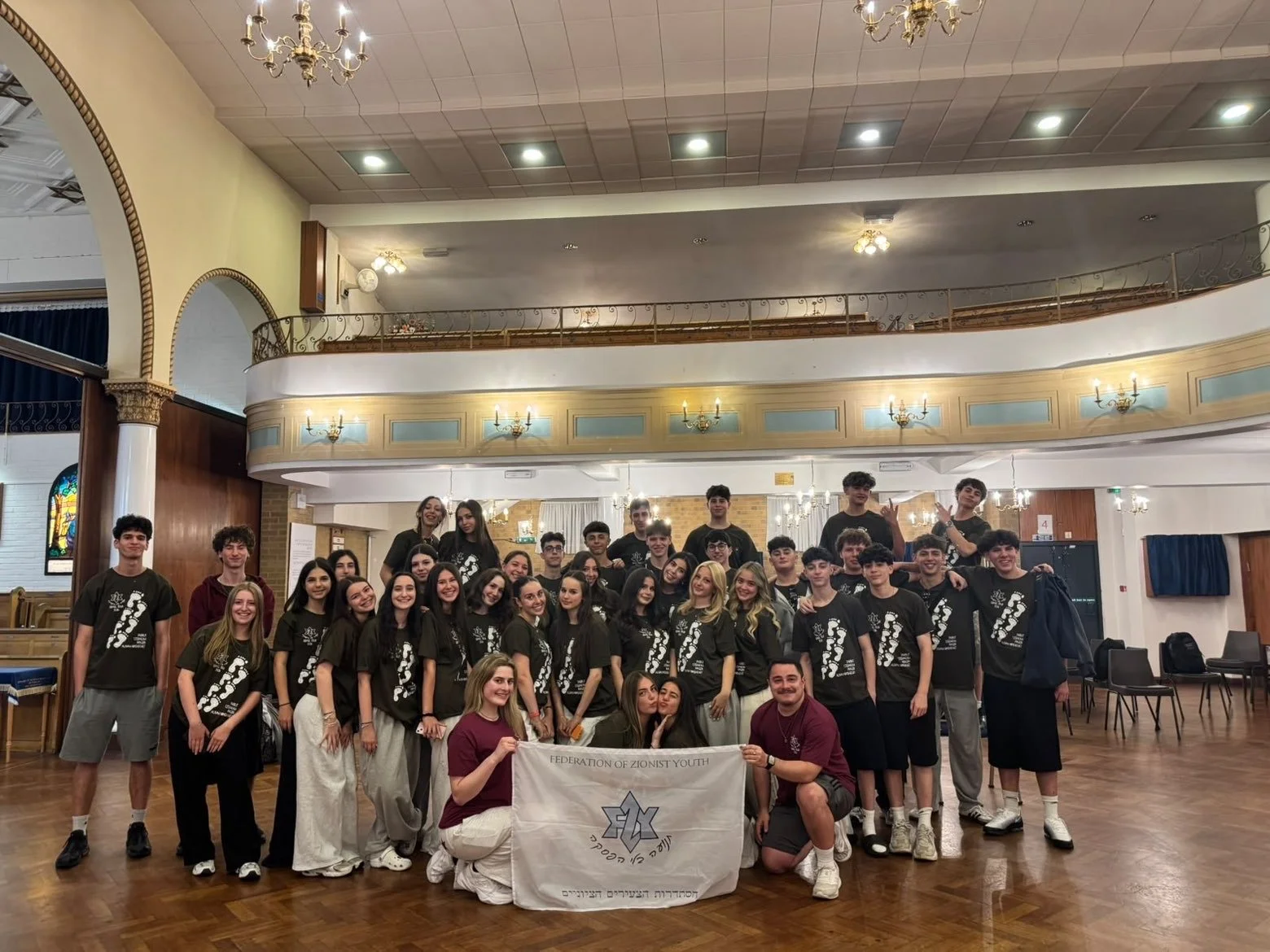
For many of us growing up in the British Jewish community, Israeli music has become part of our identity. We hear it at Jewish schools, FZY events, summer camps and, of course, on Israel Tour. We associate these songs with friendships, memories and experiences that stay with us long after we've returned home, even if we don't understand a word we're singing.
And perhaps that's part of what it means to be a British Zionist. We feel connected to a country thousands of miles away, speaking a language many of us aren't fluent in and experiencing a culture we don't always fully understand. But that doesn't make our connection any less meaningful. Perhaps taking the time to understand the music we love is one small way of getting to know the people and culture behind it.
So, next time you're on an FZY coach screaming along to Omer Adam, perhaps take a moment to find out what you're actually singing. You might discover something meaningful about Israeli society or simply realise you've spent the last three summers singing about Pablo Escobar.
Either way, turn the volume up. The British Mads are only just getting started.
