
What happens to your Jewish identity when the structures that made being Jewish easy disappear?
Coco Chalfen looks back this Rosh Hashanah on her Jewish journey, from growing up in a Jewish bubble to finding her way back to FZY.

“I never realised how Jewish my everyday life was until it stopped being Jewish.”
Every year, as Rosh Hashanah comes around, we are reminded that the new Jewish year is an opportunity to reflect on where we have been and think about where we want to go. But this year, I have found myself thinking less about what I want to change, and more about what I want to carry with me into the future. Leaving school has made me think about my Jewish identity in a way I never really had to before.
Growing up, being Jewish has always been a part of my everyday life. From being in a Jewish primary school, to attending Yavneh College secondary and then Yavneh sixth form, being Jewish was something handed to me on a silver platter. Everyone I was surrounded by was celebrating the same festivals, eating the same foods and having the same conversations about what we all know and love about Judaism. It didn’t matter how our families celebrated festivals or honoured traditions; it was something we all did together. We all went to the same Friday night Shabbat services to collect points to get into school, we all celebrated and attended countless Bar and Bat Mitzvahs, and we all learnt about the importance of Israel and Jewish history simply by being Jewish and attending Jewish schools. Every important part of Judaism was incorporated into our day-to-day lives and education.
I grew up in a bubble where a Jewish lifestyle was never something I had to actively choose to fulfil. I didn’t think twice about the lifestyle I was living. It just was.
Then I went to university.
It doesn’t matter how many lessons or lectures you are given in school about being a Jew at university or going out into the “real world”; no one warns you that this Jewish infrastructure doesn’t follow you everywhere until you actually leave. Leaving school therefore felt like more than leaving a place of education. In some ways, I was leaving the environment that had made my Jewish identity feel effortless.
However, I found that Jewish identity is both something we inherit and something we choose.
A few weeks into university, some of my new non-Jewish friends saw a card pinned to my wall saying “Chag Sameach”, which I had received from my family for Rosh Hashanah. Suddenly, I was explaining what “Chag Sameach” meant, what Rosh Hashanah was and why my family had sent me the card. These were things I had never thought twice about before. Something I had taken for granted my whole life. I found myself joining my University’s JSOC, attending weekly Chabad Friday night dinners and going to many, many Aish events. I made the decision that I was going to fast for Yom Kippur and proceeded to explain to my non-Jewish friends why I was missing University and what the festival was.
My Jewish identity had become a choice. A choice I am so privileged and grateful to make. I wanted to be proud, I wanted to make new Jewish friends, and I wanted all my non-Jewish friends to know and understand how important being Jewish is to me. I learnt that these were choices I wanted to be making and that I had the privilege to shape my own Jewish identity and path however I desired. There is something quite powerful in that choice alone.
Being at university has also made me appreciate just how important Jewish community can be when you are no longer surrounded by people who automatically understand your experiences. I am so lucky to have these options to practise being Jewish and stay involved in the Jewish community in the first place.
That being said, no one said it is easy.
I found myself not joining certain societies because their political views didn’t align with mine. I was surprised to see how even the most basic of societies, like dance or literature, were advertised alongside a Palestinian flag. I often felt uncomfortable or vulnerable walking to University with loud, busy pro-Palestine protests taking place all over my own University campus. For me, these experiences have highlighted the importance of the Jewish diaspora and why we must support each other within the Jewish community. Because together, we are stronger.
This is where I found myself choosing FZY.
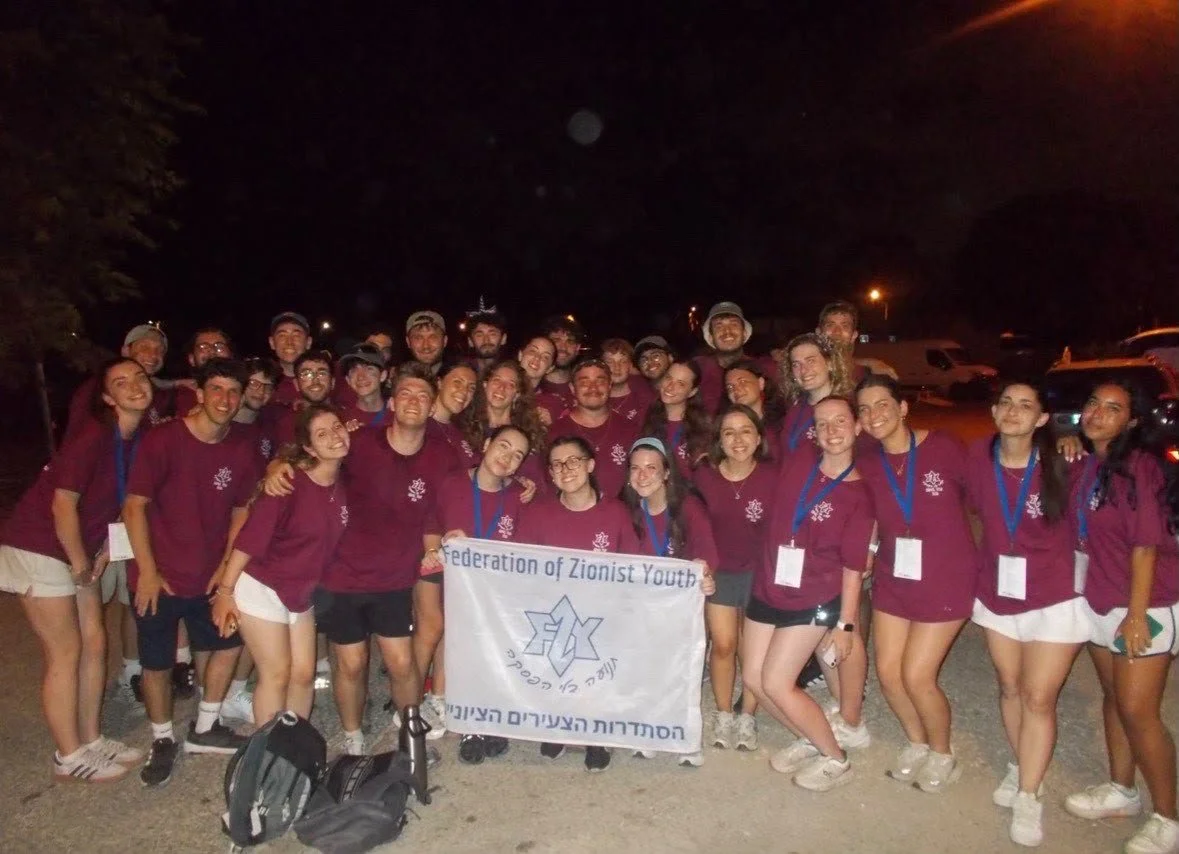
I spent my last summer as a madricha on FZY’s amazing Israel Tour programme. Having the opportunity to lead and influence the next generation around Israel for three weeks enabled me to be the Jewish role model I have always wanted to be. Not only did I have the best summer ever and make friends for life, but I also had the chance to actively engage with Israel and the younger generation, giving them the memorable experience I had at the same age.
At sixteen, I thought Tour was simply something that happened to me. At twenty, I realised that it only happened because people chose to make it happen. Madrichim, youth movement workers and communities had invested their time into creating the Jewish experiences that had felt so effortless to me growing up. I had never really thought about the people behind those experiences until I became one of them myself.
After spending so much of my life being surrounded by Jewish life and then learning at university that I had to actively seek it out, FZY gave me the opportunity to create it for someone else.
For three weeks, my Jewish identity wasn’t just something I was exploring for myself. I became responsible for sharing it with others, leading conversations, creating Shabbat experiences, talking about Israel and hopefully showing my chanichim that being Jewish can mean something different to every person. Seeing the chanichim have the best time, make new friends and create memories that they will hopefully carry with them for years made every early morning, late night and long day feel completely worth it. Hearing them say they had the “bestest time ever” made me feel valued, but more importantly, it made me feel that my time had been spent valuably.
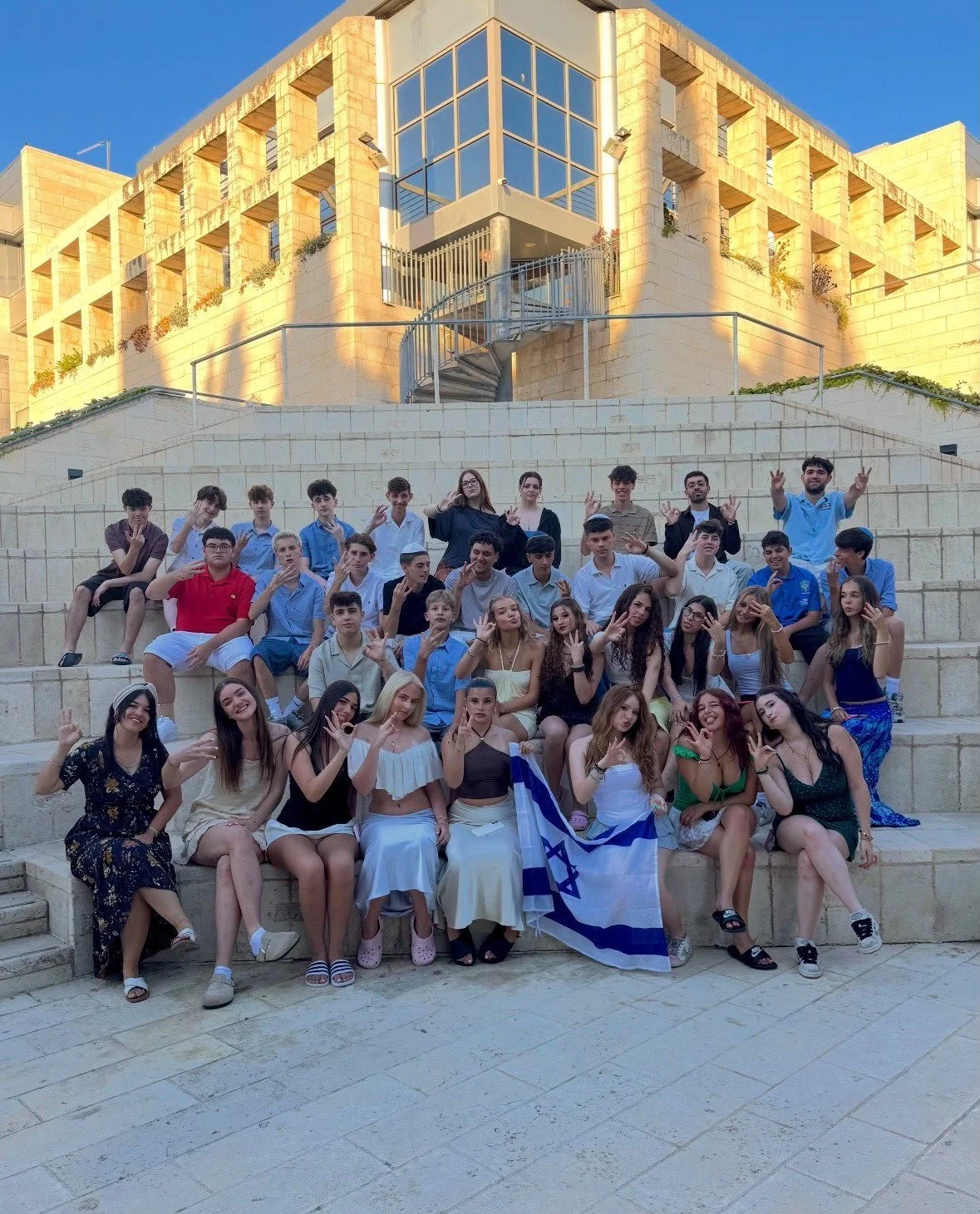
FZY made me realise that Jewish continuity isn’t simply about keeping the traditions we have inherited alive. It is about choosing to invest in the people who will carry them forward. I want to be someone who gives younger people the same sense of community, belonging and connection that I was lucky enough to receive. FZY has allowed me to maintain my Jewish identity, but also to become someone who creates Jewish life for other people rather than simply being a participant in it.
This Rosh Hashanah, I’m not interested in any “new year, new me” nonsense. I’ve learnt that a new year doesn’t necessarily mean becoming a completely new person. Perhaps it’s about reflecting on who you have been, deciding what matters to you, and choosing what you want to carry forward.
Maybe that’s what this period of the Jewish calendar is really asking us to do: not to leave our past behind, but to look at it honestly and decide what is worth taking with us. Rosh Hashanah gives us the opportunity to think about where we have come from, while Yom Kippur gives us the space to reflect on what we want to do differently. Both ask us to be intentional about the person we want to become.
What is important to you as you get older? What do you want to work on about yourself? How can you make a difference within the Jewish community?
I’ve realised that there is an important difference between being surrounded by Judaism and choosing Judaism. What that choice looks like is completely different for every individual, and that’s okay. Leaving school didn’t make my Jewish identity smaller; it made it more meaningful and intentional.
My only regret in life is not joining FZY sooner.
Chag Sameach. Happy, healthy, sweet new year and Am Yisrael Chai.
